The property opportunity series / Washington

Three paper plays.
One more possibility.

Buy with a plan for what comes next. Three paper development strategies—and one bonus lot-split play—for investors, home buyers and small developers looking for opportunity in Washington real estate.

Watch the full conversation with Mike Appleby →October 22, 2026 · Snohomish County focus

Value before the vertical build

Do the homework.
Create more options.

A “paper play” means doing the feasibility, planning and ownership work that can make a property’s next use clearer. Depending on the property, the exit could be selling an opportunity, keeping the home, holding for later, or building.

Start with the acquisition: what are you buying, what can you verify before closing, and who is the likely buyer or occupant at the end? The value comes from resolving uncertainty. Surveying, legal work, approvals, infrastructure and market demand still matter. A condominium structure creates a form of ownership; a lot split creates separate legal lots.

DADU = detached accessory dwelling unit. These are strategies to investigate, not parcel approvals or guaranteed returns.

01 / Find your starting point

Three properties.
Three ways to look again.

01

The backyard play

Buy the house. Recognize the backyard opportunity.

A property with usable yard space may offer an opportunity for detached accessory dwelling units (DADUs) and a condominium ownership structure.
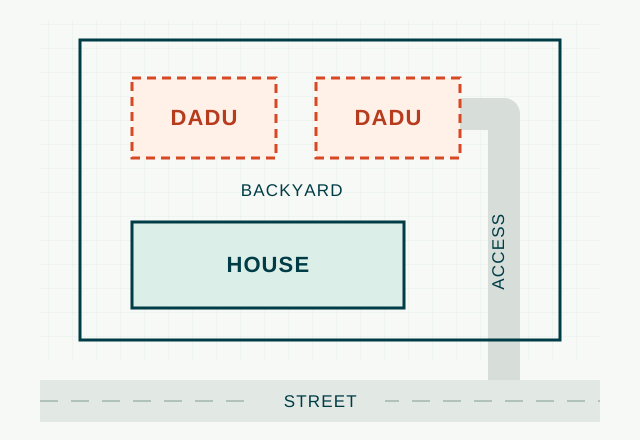
Conceptual lot outline with an existing house near the street, two proposed DADU boxes behind it, and side access.
A simple site-plan example

The house is only part of the picture.

A simple house footprint on a larger lot, with two possible backyard DADUs and access along the side.

  • Property / existing structure
  • Proposed change
  • Conceptual access

The DADU boxes illustrate a possibility to investigate. The property remains one underlying lot in this concept.

Concept only · Not to scale · Not a survey or approved plan

Who it may fit

Home buyers looking for a place to live with future options, and investors seeking an existing home with additional housing potential.

The paper work

Confirm the permitted housing configuration, sketch access and utilities, and ask a surveyor and condominium attorney whether a recordable, marketable ownership structure is feasible before construction.

Help me find or evaluate this opportunity →

What makes or breaks it

An alley or a large yard is a starting point. Fire access, trees, drainage, utilities, setbacks, title restrictions and the existing mortgage can change the answer.

See the interview example

Mike described an owner receiving about $80,000 for a backyard opportunity. That is an interview illustration, not a verified comparable sale or a value estimate for your property.

Budget for consultants, recording, improvements, holding costs, lender requirements and sale costs. Compare the remaining property’s value as well as the new opportunity.
Washington ADU framework ↗
02

The rural acreage play

Buy acreage with another dwelling in mind.

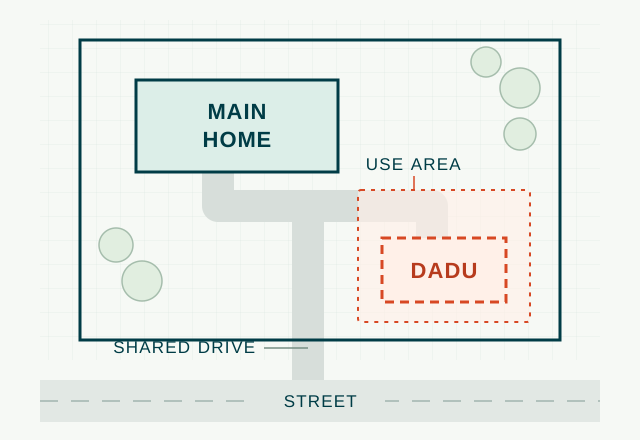
Explore whether an eligible rural Snohomish County property can support a DADU and whether separate condominium ownership is workable.

Conceptual acreage plan with a main home, possible DADU use area and shared driveway, all inside one property boundary.
A simple site-plan example

One acreage property. Another housing option.

A principal home and a possible DADU share access within the same property boundary.

  • Property / existing structure
  • Proposed change
  • Conceptual access

The dashed use area is conceptual. It does not represent a separate legal lot or approved condominium boundary.

Concept only · Not to scale · Not a survey or approved plan

Who it may fit

Acreage buyers, investors and small developers evaluating an additional dwelling opportunity as part of an acquisition.

The paper work

Verify the jurisdiction, zoning, legal lot size, principal residence requirement, water, septic capacity and shared access. Have counsel review the proposed unit boundaries and ownership documents.

Help me find or evaluate this opportunity →

What makes or breaks it

A condominium unit or exclusive-use area is not automatically a new one-acre legal lot. Do not assume rural ADU permission also establishes the right to sell an unbuilt unit.

See the interview example

Mike illustrated buying acreage for $250,000, recovering that amount from the remaining acreage, and holding an additional opportunity valued at $150,000. Those assumptions need independent valuation and a complete cost budget.

Budget for consultants, recording, improvements, holding costs, lender requirements and sale costs. Compare the remaining property’s value as well as the new opportunity.
County ADU standards ↗
03

The urban infill play

Test a duplex plus two DADUs.

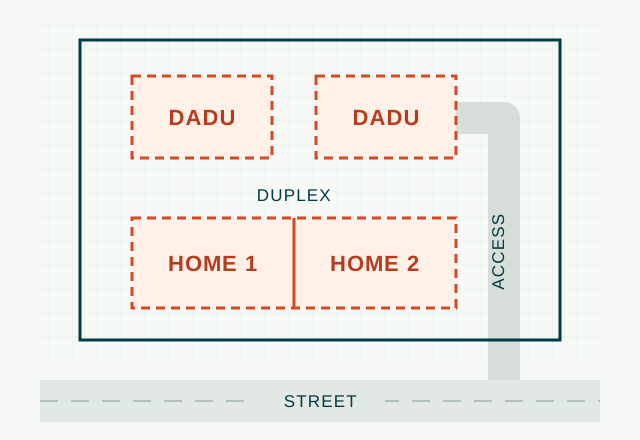
On a qualifying urban site in unincorporated Snohomish County, explore a duplex with up to two ADUs and the ownership structure a future builder would need.

Conceptual urban lot showing a proposed duplex divided into home one and home two, plus two proposed DADUs at the rear.
A simple site-plan example

See the four-home concept at a glance.

Two homes in a duplex at the front, two possible DADUs behind, and an access lane beside them.

  • Property / existing structure
  • Proposed change
  • Conceptual access

All four homes are proposed in this sketch. Actual access, setbacks, utilities and site constraints determine what fits.

Concept only · Not to scale · Not a survey or approved plan

Who it may fit

Investors and small developers evaluating an urban acquisition, with a potential resale to a builder before vertical construction.

The paper work

Have the team test the building envelope, access, utilities and critical areas together. Then establish what can legally be recorded and what approvals or improvements remain for the buyer.

Help me find or evaluate this opportunity →

What makes or breaks it

The county code allows up to two ADUs with a duplex in qualifying urban zones. A four-home concept still needs site-specific feasibility; a map does not approve construction.

See the interview example

Mike's example compared a $275,000 acquisition with a potential $400,000–$425,000 resale after mapping. The $125,000–$150,000 difference is before expenses, financing, taxes and selling costs; it is not net profit.

Budget for consultants, recording, improvements, holding costs, lender requirements and sale costs. Compare the remaining property’s value as well as the new opportunity.

County duplex and ADU configurations ↗

+ / The bonus play

A separate lot.
A different exit.

Find a property where a two-lot split could create a new exit.

Evaluate a lot-split opportunity ↗

The interview’s fourth opportunity is an abbreviated two-lot subdivision process. For buyers and small developers, an eligible property could offer a house and a separately saleable parcel after the required approvals and work. Existing owners may also be able to retain the house and sell the additional lot.

Start with the applicable local process, minimum lot dimensions, legal access, services, critical areas and what each resulting lot must provide. Compare the value of both pieces after the split and all work needed to make them saleable.

Checked October 22, 2026

Snohomish County’s council record lists Ordinance 26-036 as amended and approved 5–0 on October 14. Approval alone does not establish when applications can use the new process. Confirm the effective date, final requirements and application availability with PDS.

Read the county hearing record ↗

The interview’s two-to-three-month timeline and $5,000–$10,000 cost were estimates. Obtain a parcel-specific scope and budget. Washington HB 1096 background ↗

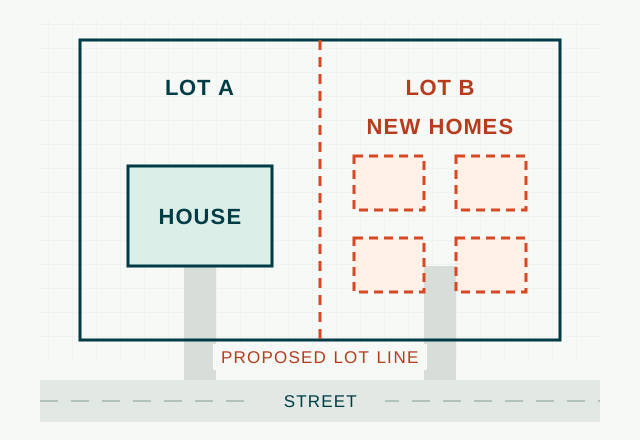
Conceptual two-lot split with an existing house on Lot A, four smaller proposed homes labeled new homes on Lot B, and an orange dashed proposed boundary.
A simple site-plan example

Draw the distinction: two separate lots.

An existing house on Lot A and four smaller proposed homes on Lot B, separated by a proposed lot line.

  • Property / existing structure
  • Proposed change
  • Conceptual access

The line illustrates a proposed subdivision. Lot creation and the number of new homes depend on the applicable zoning and approvals.

Concept only · Not to scale · Not a survey or approved plan

02 / Protect the opportunity

Understand the land
before drawing the lines.

Wetlands, streams, slopes and recorded restrictions can change the usable area long before construction begins.

Start with the recorded history

Mike also discussed critical-area site plans. Snohomish County calls these CASPs: recorded plans identifying critical areas, buffers and proposed development. Find any existing plan and have a qualified consultant interpret it alongside the current rules.

Do not assume that recording a plan permanently freezes every setback or guarantees future development. Any protection depends on the actual approval, applicable law and the proposal.

How to Create and Record a Critical Area Site Plan aka a CASP →

County critical-area requirements ↗

01

Locate

Confirm city limits or unincorporated county, zoning, urban-growth boundary and legal lot status.

02

Test

Check access, utilities, septic or sewer, drainage, trees, critical areas and the building envelope.

03

Structure

Review survey, title, lender consent and the proposed ownership or subdivision path with qualified professionals.

04

Compare

Price the work and the realistic exits: sell as-is, prepare and sell, build, or hold.

Find it. Evaluate it. Make your move.

Let’s find your next property opportunity.

Tell us where you want to buy, your budget, and whether you want a home, an investment, or a small development project. Have a property in mind? Start with what you want to test.

Choose a starting point to prepare an editable message. You decide when to send. Keep financial account numbers and private documents out of chat.

Have a deal? Bring it to the team →
Talk with Anton about buying →
Your conversation

Ask in your own words.

Chat uses Functional cookies. Review to enable them.

If chat still does not appear, email the team. Nothing has been sent from this page.

You’re chatting with our digital assistant. Responses can make mistakes. Chat sessions are recorded. Verify important information before acting. About using Ask Anton
By sending a message, you agree to our Terms of Use, including arbitration and use of your submissions in content, and acknowledge our Privacy Policy.

Before your next move

A few straight answers.

Can I sell a condominium opportunity before building?

That requires specific legal review. Washington’s condominium creation rules require recorded documents and certifications. Whether an unbuilt unit can be created and conveyed depends on the structure, applicable law, title, lender requirements and local development rules. An ADU allowance alone is not enough. Read RCW 64.90.200.

Does every large yard or five-acre property qualify?

No. Location, legal lot status, zoning, existing buildings, access, utility capacity and environmental constraints all matter. A mailing address does not establish which jurisdiction controls the property. Start with a parcel review.

Do these strategies require me to become a builder?

The idea is to explore whether feasibility and ownership work can create a useful exit before construction. Buyers may still require permits, improvements or additional evidence. Compare that route with selling as-is and with building; the best choice depends on the property and your goals.

Where should I start if I am buying an investment?

Work backward from the likely buyer and the completed scope they need. Include due diligence, financing, professional fees, site work, taxes, contingencies and sale costs. Have your team test the proposal before relying on a unit count or projected resale value. Bring a deal to the team →

Build your buying strategy.

Define the location, budget and exit before you choose the property.

Find a home with the team →
Explore investing →

Keep learning with AskAnton.

Get market perspective and practical property ideas.

Subscribe to the newsletter →

About this guide. Based on the October 22, 2026 conversation between Anton Stetner and Mike Appleby. Interview examples are attributed illustrations, not independently verified transactions. Official sources linked above were checked October 22, 2026; the online county code reported updates through August 19, 2026, so later enacted rules must be checked separately.

General education, not legal advice, an appraisal, a feasibility determination or a promise of approval. Use a land-use professional, surveyor, condominium attorney and other qualified consultants for the property. Brokerage and affiliate disclosures.